Montenegro is the most natural day trip out of Dubrovnik. The border is 30 minutes south of the city, the Bay of Kotor starts another 30 minutes after that, and within two hours of leaving Dubrovnik Old Town you can be in Perast or Kotor. We get this question every week from guests on airport pickups: “Is it worth crossing into Montenegro for a day, or should we save it for another trip?”
The honest answer is yes, with one caveat — the border in summer can eat hours of your day if you don’t plan around it. This is the same breakdown we give clients when they ask us to set up a Dubrovnik-to-Montenegro day trip, with the five places that actually deserve the drive.
Quick facts: Dubrovnik to Montenegro
- Distance to the border: ~30 km from Dubrovnik to Karasovići – Debeli Brijeg crossing
- Distance to Herceg Novi: ~45 km, 1 h with normal border
- Distance to Kotor: ~90 km, 2 h with ferry shortcut
- Distance to Budva: ~110 km, 2 h 15 min off-peak
- Border crossings: Karasovići – Debeli Brijeg (main) or Vitaljina – Kobila (smaller, often less busy)
- Bay of Kotor shortcut: Kamenari–Lepetane car ferry, 10 min crossing, runs around the clock
- Documents: Passport strongly recommended for all travellers; entry rules depend on nationality
- Currency: Euro (same as Croatia)
How we set up a Dubrovnik to Montenegro day trip
Most of our Montenegro day trips from Dubrovnik take a similar shape: pickup between 8:00 and 9:00, border by 9:30, three or four stops along the Bay of Kotor, lunch in Perast or Kotor, and back across the border by 19:00. That timing matters — leaving early avoids the worst border traffic in both directions, and you can fit Herceg Novi, Perast and Kotor into a single day comfortably.
If guests want Tivat or Budva added, that’s still doable but you have to drop one of the other stops or accept a longer day. Trying to see all five in one day is a mistake — the drive between Herceg Novi and Budva alone is two hours each way without stops, and you end up rushing every place.
Which border crossing to take
There are two practical crossings between Dubrovnik and Montenegro:
Karasovići – Debeli Brijeg. The main coastal crossing on the Adriatic Highway. Open 24/7 and used by all bus and truck traffic. This is the default for tour buses and most rental cars. In peak summer (especially weekends in July and August), the queue here can stretch from 30 minutes to 2–3 hours.
Vitaljina – Kobila. A smaller crossing about 8 km south of the main one. Generally open around the clock and used by passenger cars and motorcycles — buses go through Karasovići. The detour adds 10–15 minutes of driving but in peak summer it’s often half (or less) of the main border queue.
Our drivers check live border camera feeds before each Dubrovnik-to-Montenegro transfer and switch to Vitaljina if Karasovići is heavily backed up. That call is sometimes made minutes before the turnoff — there’s no point committing to a border that’s an hour deep when the alternative is 5 km away.
Herceg Novi — first stop after the border
Herceg Novi sits at the mouth of the Bay of Kotor, about 45 km from Dubrovnik and 15 minutes past the border. It’s the closest Montenegrin town and a useful first stop on a day trip — long enough for a coffee on the promenade, a 30-minute walk through the old town, and the climb up to Kanli Kula fortress for the bay view.
What’s worth your time:
- Old town and Kanli Kula fortress. The fortified upper part of town is a 10-minute walk uphill from the seafront. The fortress walls give the best Bay of Kotor view in Herceg Novi.
- The promenade. A long seafront walk lined with cafés, palms and small swimming areas. Less polished than Kotor, more lived-in.
- Igalo. Just west of Herceg Novi, known for medicinal mud and a quieter beach scene. Worth a stop only if a guest specifically wants the spa angle.
- Savina Monastery. 15 minutes’ walk from the centre, an Orthodox monastery with a working vineyard. Quiet, free entry, easy to combine with the old town walk.
For most of our day trips Herceg Novi is a 45–60 minute stop, not a full half-day. Guests who want longer here usually book a separate Dubrovnik to Herceg Novi private transfer instead of a full Bay of Kotor itinerary.
Perast — the quietest stop on the bay
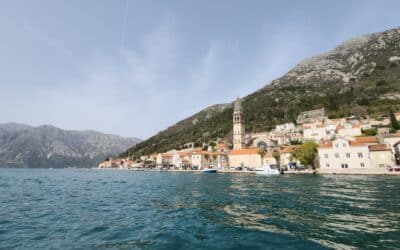
Perast is one of the most-photographed stops on any Dubrovnik-to-Montenegro day. About 250 permanent residents, 17 baroque palaces, 16 churches, and the entire town is a 1.5 km waterfront promenade with no through-traffic. Cars stop at the village edge — the centre is walked.

What we tell guests to do here:
- Walk the promenade. 15–20 minutes from one end of the village to the other. Coffee at one of the seafront cafés is a fixed part of most of our Bay of Kotor itineraries.
- Take the boat to Our Lady of the Rocks. The man-made islet just offshore with the church and small museum. Round-trip boats run from the Perast waterfront roughly every 10–15 minutes in season; the crossing takes 5 minutes and the visit takes 30. This is one of the parts of the day most guests remember.
- St Nicholas church bell tower. Climb is short, view at the top covers the whole bay and the two islets.
Perast pairs naturally with Kotor — they’re 15 minutes apart by car. We almost always do them on the same day, in this order: Perast first (quieter in the morning), Kotor after lunch.
Kotor — the headline UNESCO town
Kotor old town is the main reason most people come to Montenegro on a day trip. UNESCO-listed, walled, dense with churches and small squares, and dramatic in a way Perast and Herceg Novi aren’t — the limestone walls of Mount Lovćen rise straight up behind the town to over 1,500 metres.
The basics:
- Old town walk. 1.5–2 hours covers Trg od Oružja (the main square), the cathedral of St Tryphon, the smaller churches, and the maze of narrow streets between them. Compact enough that you can’t really get lost.
- City walls climb. The big one. Stone steps zigzag from the old town up to the fortress of San Giovanni at the top. About 1,350 steps, 1 to 1.5 hours up at a steady pace, longer with photo stops. Entry fee, water and proper shoes essential. The view at the top covers the whole inner bay and is the photo most guests come for.
- Cathedral of St Tryphon. Founded in 1166. Small treasury inside is worth the few euros if you’ve already paid to enter.
- Cats and the cat museum. Kotor’s strays are a local attraction; the small cat museum on the square is a five-minute stop, not a destination.
For a day trip, we tell guests to skip the wall climb if it’s hot — August midday on those steps is brutal and there’s no shade. Either start at 8:00 before the heat, or pick another viewpoint (Trojica or Pestingrad above the bay) accessible by car. For guests who only want Kotor without the Bay of Kotor circuit, we run a direct Dubrovnik to Kotor private transfer.
Tivat and Porto Montenegro
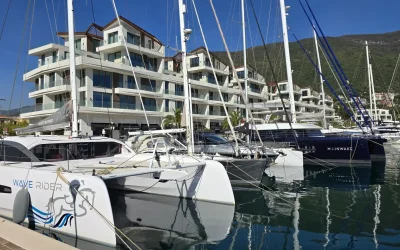
Tivat is a different feel from the rest of the bay. The town itself is unremarkable; the draw is Porto Montenegro, the luxury marina built on the site of a former Yugoslav navy yard. Yachts, boutiques, restaurants, and a small naval heritage museum.

Tivat is also the closest international airport to the southern Bay of Kotor — many of our guests fly into Tivat instead of Dubrovnik when they’re staying in Kotor or Budva. The airport is 4 km from the centre.
For a day trip from Dubrovnik, Tivat is a 30–60 minute coffee-and-walk stop. The Porto Montenegro promenade is photogenic, the prices are tourist-priced (€4 espresso, €30+ mains), and the marina photos are the kind that don’t really need an hour to capture. We add Tivat to itineraries if guests specifically want the luxury-marina angle, or if they’re already taking the Kamenari–Lepetane ferry across the bay (which lands 8 minutes from Tivat). For a direct run we offer a Dubrovnik to Tivat private transfer.
Budva — the beach end of Montenegro
Budva is the furthest of the five from Dubrovnik — about 110 km, 2 h 15 min off-peak. It sits outside the Bay of Kotor on the open Adriatic coast, which means real beaches, real summer crowds, and a different vibe from Perast or Kotor.

What’s worth seeing if you make it this far:
- Budva old town. Walled, small, Venetian-style — similar bones to Kotor or Perast but with a beach next to it. 30–45 minutes covers it.
- Mogren beach. Closest swimmable beach to the old town, 5 minutes’ walk through a tunnel from the main promenade.
- Sveti Stefan. The iconic islet hotel, 6 km south of Budva. The hotel itself is closed to the public, but the photo from the road above is the postcard everyone takes home.
- Slovenska Plaža. The main beach strip east of the old town. Long, busy, with hotels and bars all along it.
For a day trip from Dubrovnik, Budva alone is a stretch — 4+ hours of driving for 4 hours on the ground. We usually only suggest it if guests are skipping Kotor or specifically want the beach angle. For most clients, Budva works better as the first stop of a longer Montenegro stay than as a same-day round trip — bookable via our Dubrovnik to Budva private transfer.
Combining Trebinje on the way back
One detour we offer regularly: instead of returning to Dubrovnik through the same Croatia–Montenegro border, drive home through Bosnia and stop in Trebinje. The route adds about 45 minutes total but skips the often-jammed return crossing at Karasovići, especially in the late afternoon when day-trippers all head back at once.
Trebinje is 30 km from Dubrovnik on the Bosnian side, with a short border crossing at Brgat Gornji that’s much less busy than the coastal one. We use this loop on summer days when the Karasovići queue is long, or when guests want to add Tvrdoš monastery and a wine tasting to the day. Two short borders often beat one congested coastal crossing.
For more on the Trebinje route, see our Trebinje from Dubrovnik guide.
Recommended Bay of Kotor day trip itinerary
The day trip we set up most often, refined over years of running this route:
- 08:00 — pickup in Dubrovnik
- 09:00 — Trebinje stop (45 minutes, optional, if going via Bosnia)
- 10:30 — border crossing into Montenegro
- 11:00 — Verige strait viewpoint above Perast (15 minutes)
- 11:30–13:30 — Perast and Our Lady of the Rocks (2 hours including boat)
- 13:30–15:30 — Kotor old town and lunch (2 hours)
- 15:30 — Trojica viewpoint above Kotor (15 minutes)
- 16:00 — return drive
- 19:00–20:00 — back in Dubrovnik
That covers the bay properly without rushing. Tivat and Budva can swap in for one of the morning stops, but they shouldn’t be added on top of this without losing time somewhere else.
How we help clients with Dubrovnik to Montenegro day trips
The bookings that work best are full-day round trips with 4–6 hours of stops in Montenegro. We pick the border based on real-time conditions, plan the stops in the order that beats the crowds, and time the return so the border isn’t the worst thing about the day.
If you want us to set up a Dubrovnik-to-Montenegro day, send us your dates and which of the five places interest you most. We’ll build the itinerary around what matters — Bay of Kotor scenery, Kotor old town, Perast and Our Lady of the Rocks, beach time at Budva, or a combination — and confirm a fixed price for the full day before you book.
For multi-stop Bay of Kotor days we run regular private tours from Dubrovnik — get in touch with your dates and we’ll plan the timing around the borders and the destinations.
Frequently asked questions
Is Montenegro worth visiting from Dubrovnik?
Yes. Montenegro’s Bay of Kotor is one of the most scenic stretches of coastline in Europe, and three of its highlights — Perast, Kotor and Herceg Novi — are within a 1–2 hour drive of Dubrovnik. A well-planned day trip covers all three with time for Our Lady of the Rocks and Kotor old town. The main downside is the border in peak summer, which can add hours if you don’t time it carefully.
How long does it take to drive from Dubrovnik to Montenegro?
About 45 minutes to Herceg Novi (the closest town), 2 hours to Kotor with the Kamenari–Lepetane ferry shortcut, and 2 hours 15 minutes to Budva. In peak summer add 1–2 hours for border queues, especially returning to Croatia in the late afternoon.
Do I need a passport from Dubrovnik to Montenegro?
Yes. Montenegro is not in the EU or Schengen, so the Croatia–Montenegro border is a full international crossing. All travellers should carry a valid passport, including children. Some EU citizens can enter Montenegro with a national ID card, but non-EU travellers should always carry a passport.
Which is the best border crossing from Dubrovnik to Montenegro?
Karasovići – Debeli Brijeg is the main 24/7 crossing on the Adriatic Highway and is used by all bus traffic. Vitaljina – Kobila is a smaller crossing 8 km south, open only to passenger cars and motorcycles, often with shorter queues in peak summer. Buses must use Karasovići.
Can you visit Montenegro from Dubrovnik in one day?
Yes — most of our Dubrovnik-to-Montenegro day trips fit comfortably into a 10–12 hour day. The realistic itinerary is Herceg Novi, Perast and Kotor with Our Lady of the Rocks and lunch in between. Adding Tivat and Budva to the same day means rushing every stop. For a calmer pace, an overnight in Kotor or Budva works better.
Is there a ferry from Dubrovnik to Montenegro?
A seasonal fast catamaran runs from Dubrovnik to Budva and Kotor in summer (typically July and August), foot passengers only. The crossing takes about 2 hours. There is no car ferry on this route, so most of our guests use private transfers or rental cars instead.
What’s the best time to visit Montenegro from Dubrovnik?
Late April through June and September into October are the sweet spots — warm enough for swimming and walking, restaurants open, manageable border queues, and the bay at its greenest. July and August work but expect heat, crowded old towns, and 1–3 hour border waits. Winter is quiet and very mild, with most coastal restaurants closed but the towns themselves still walkable.